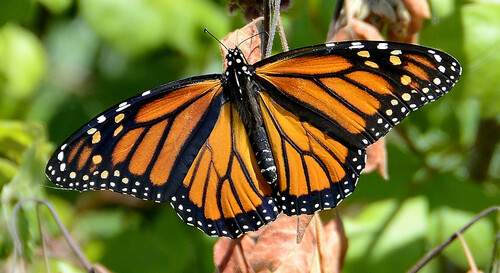
If a large orange butterfly with bold black lines glides through a milkweed patch in late summer, you might be watching one of the most epic travelers in the insect world, the Monarch Butterfly (Danaus plexippus). The one in your yard might be on its way to a single mountain in central Mexico.
What it looks like
Wingspan is 9 to 10cm, large enough to spot from across a yard. The upper wings are deep orange with thick black veins and a black border dotted with two rows of small white spots. The underside is paler. Males have two small black scent patches on the hind wings, females do not. Caterpillars are striking too, with bright yellow, black, and white stripes that warn predators to stay away.
When and where
- Season: April to October across most of the US. Peak numbers in late August and September during the southern migration.
- Habitat: Meadows, prairies, gardens with milkweed, roadside wildflower strips. Always close to milkweed plants.
- Best time: Sunny mid-morning, when they warm up and start feeding on flowers like coneflower, zinnia, and goldenrod.
A four-generation migration
A single monarch lives only about 5 weeks in summer. But the last generation born in late summer is different, it lives 8 months and flies up to 4,800km south to the same fir forests in Mexico where its great-great-grandparents wintered. No one monarch has ever made the full round trip. They navigate using the sun, the earth's magnetic field, and some signal scientists are still trying to fully decode.
Spot one this weekend
Monarchs are Uncommon in most yards but Common wherever milkweed grows. Plant native milkweed or visit a prairie restoration in late summer and you will almost always see a few. Look on the underside of milkweed leaves for the striped caterpillars or the pale green chrysalis with tiny gold dots, both are easier to find than the adults.