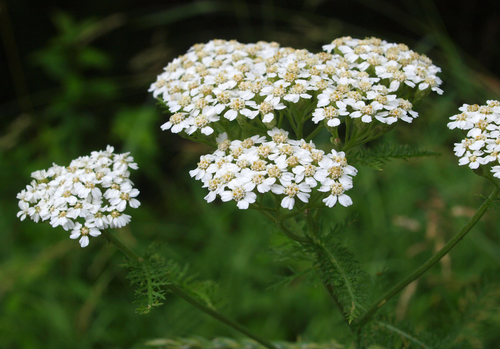
If a wildflower with a flat plate of tiny white blossoms is standing in a dry roadside ditch beside feathery, fernlike leaves, you found Common Yarrow (Achillea millefolium). It is one of the toughest plants on the continent and one of the easiest summer wildflowers to identify because of its leaves.
What it looks like
Plants stand 30 to 90cm tall on a single stiff stem. The leaves are the giveaway: dark green, soft, finely divided into hundreds of tiny segments so the whole leaf looks like a fern frond or a feather. The flowers are not one big bloom but a flat-topped cluster, 5 to 10cm wide, made up of dozens of tiny white flowers with five petals each. Some plants have a pale pink form, especially in cooler regions.
When and where
- Season: June through September across the US and Canada.
- Habitat: Dry roadsides, meadows, prairies, abandoned lots, mountain trails up to about 3000m.
- Best time: Sunny afternoons when small bees, hoverflies, and beetles cover the flower tops.
An ancient first aid plant
Yarrow has been used as a wound-healing herb for thousands of years. The Latin name Achillea comes from the Greek hero Achilles, who, according to legend, used the leaves to stop bleeding on the battlefield. Crushed leaves were packed into cuts to help clot the blood, and the plant does contain compounds that have a mild astringent effect. Native American tribes across the continent used yarrow for fevers, toothaches, and skin issues. Today it still shows up in herbal teas and salves.
Spot one this weekend
Common yarrow is Common across all 50 US states and most of Canada. Look along dry, sunny roadsides and pull over for a closer look. Pinch a leaf and smell your fingers, the scent is a sharp herbal, slightly bitter aroma unlike anything else in the meadow. That smell test is the surest way to confirm yarrow without a field guide.