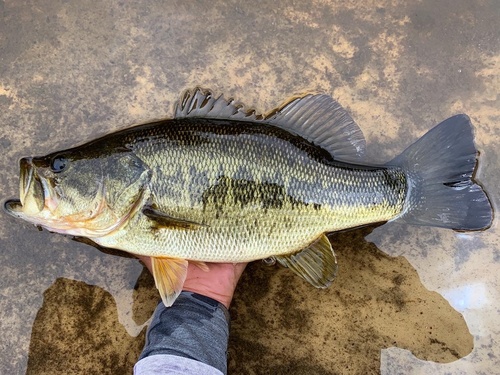
If you peer off the end of a pond dock in summer and see a long green shadow hovering motionless under the lily pads, it is almost certainly a Largemouth Bass (Micropterus salmoides). It is the most popular freshwater game fish in the US and lives in nearly every warm pond and lake in the lower 48.
What it looks like
Adults are typically 30 to 50cm long and weigh 1 to 4kg, though trophy fish can pass 9kg. The back is olive green, the sides paler with a jagged dark stripe running from gill to tail, and the belly is creamy white. The mouth gives the species its name: the upper jaw extends back past the eye, far enough to swallow a small bird or frog whole. The dorsal fin is split into two parts, with the front section spiny and the back section soft.
When and where
- Season: Year round, most active April through October when water is warm.
- Habitat: Ponds, slow rivers, lake edges with lily pads, sunken logs, dock pilings.
- Best time: Early morning and late evening, when bass move into the shallows to ambush prey.
The bedside guardian
In spring, male largemouth bass fan out a round nest in the gravel by sweeping it with their tail. After a female lays eggs, the male guards the nest for weeks, chasing off bluegill, crayfish, and anything else that comes near. If you see a circular pale patch the size of a dinner plate on the pond bottom in May, there is usually a male bass hovering directly above it. Walk past quietly, since stressed nest guards sometimes abandon the eggs.
Spot one this weekend
Largemouth bass are Common in every US state except Alaska. Stand quietly at the end of a dock or fishing pier at dawn and watch the shaded edges of lily pads or submerged branches. The bass holds dead still until it strikes, then disappears in a swirl. Polarized sunglasses cut the glare and double the chance of spotting one.