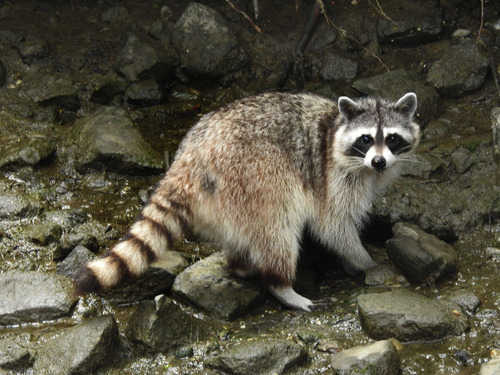
If a chunky gray animal with a black bandit mask and a ringed tail is staring back at you from a tree or trash can after dark, you just met a Raccoon (Procyon lotor). They are one of the most adaptable mammals in North America and live almost everywhere on the continent, from rural farms to downtown alleys.
What it looks like
Adults stand about 30cm at the shoulder, measure 60 to 95cm including the tail, and weigh 5 to 12kg. The body is silvery gray to brownish gray with a stocky build. The face has a bright black mask across the eyes outlined by white fur. The tail is the giveaway: five to seven alternating black and brown rings. The paws look surprisingly like tiny human hands, with five long fingers and no fur on the palms.
When and where
- Season: Year round across the lower 48 states and southern Canada.
- Habitat: Suburban yards, city parks, woodland edges, marshes, alongside rivers and creeks.
- Best time: Late evening into the night, especially the first hour after sunset.
Hands that almost read
Raccoons have some of the most sensitive paws in the animal world. The pads are packed with nerve endings, and they can identify objects underwater by feel alone. In studies, raccoons can remember solutions to puzzle locks for at least three years and adapt the technique to similar locks they have never seen before. The Latin name lotor means "the washer" because raccoons often dunk and rub food in water before eating. Scientists now believe the dunking is not really washing, but a way to soften the paw skin and feel the food better.
Spot one this weekend
Raccoons are Common in nearly every US state and increasingly bold in suburbs and cities. Walk a backyard or local park about an hour after sunset with a quiet step. Listen for soft chittering or the scratch of claws on bark. Never feed a raccoon and never approach a daytime raccoon that seems unafraid of people, since that can be a sign of illness. Watching from a window with the porch light on is the safest family viewing.