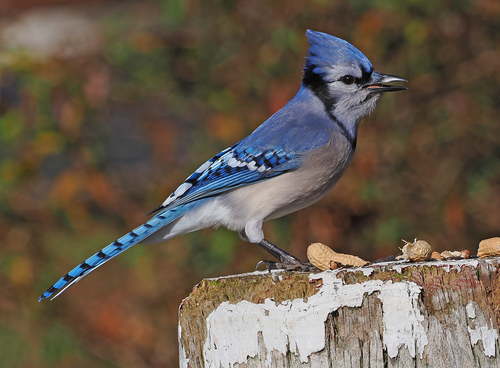
If a brilliant blue bird with a pointed crest lands on the feeder and every other bird scatters, you just met a Blue Jay (Cyanocitta cristata). They are loud, smart, and not even close to shy, which makes them one of the easiest birds for kids to recognize in eastern North America.
What it looks like
Adults are about 28cm long with a crested head, a sky-blue back and wings, and a clean white chest and belly. A neat black "necklace" wraps around the throat, and the wings carry crisp white bars with black checker marks. The blue color is not actually pigment, it is a trick of light bouncing off tiny feather structures, so a wet jay looks duller than a dry one.
When and where
- Season: Year round across the eastern US and southern Canada. Some flocks drift south in fall.
- Habitat: Oak woods, suburban yards, city parks, almost any place with mature trees and a peanut feeder.
- Best time: Early morning at feeders. They also raid the same feeder at the same hour for weeks once they find it.
The forest planters
Blue jays are obsessed with acorns. A single jay can carry up to five acorns at a time, three in the throat pouch, one in the mouth, and one in the beak. They bury thousands every fall and forget where many of them are. Those forgotten acorns sprout into oaks, which means jays have quietly replanted huge stretches of eastern forest after every ice age. Not many backyard birds can list "rebuilt a continent" on the resume.
Spot one this weekend
Blue jays are Common across the entire eastern half of the continent. Put whole peanuts in the shell on a flat tray feeder and a jay will usually find them within a day. They like to grab one, fly to a branch, and crack it open with the beak braced between the feet. The loud "jay! jay!" call is often the first sign one is on the way.