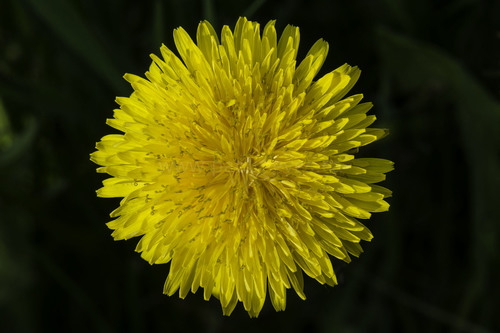
The yellow flower that pops up in every lawn the moment the snow melts is the Common Dandelion (Taraxacum officinale). It is probably the first wild plant most kids in North America can identify by name, and it is in flower somewhere on this continent almost every month of the year.
What it looks like
A dandelion is 10 to 30cm tall when in flower. The bright yellow head is actually 100 to 300 tiny strap-shaped florets packed together, not one flower. The leaves grow in a flat rosette at ground level and have deep, jagged lobes that point backward toward the base. When you snap any part, white milky sap leaks out. After flowering, the head closes for a few days and then reopens as the famous round white seed clock.
When and where
- Season: Spring through fall, with the biggest yellow bloom in April and May.
- Habitat: Lawns, sidewalk cracks, park edges, fields, almost any sunny open ground in the US and Canada.
- Best time: Sunny mid morning, when every flower is fully open. They close at night and on cloudy days.
A parachute built for distance
Each dandelion puff is made of 100 to 200 seeds, and each seed has a tiny umbrella of fine white hairs called a pappus. Research shows the pappus creates a small ring of low pressure above itself that pulls the seed upward, letting it stay airborne for kilometers in the right breeze. A single plant can produce 5,000 seeds in one season, which is why pulling one rarely solves the lawn problem.
Spot one this weekend
Dandelions are Common everywhere a human has ever stood on grass. Pick a yellow head and a puffball and bring both home, so your kid can see the same plant in two stages. The young leaves are edible and slightly bitter, like arugula, if your yard is unsprayed.