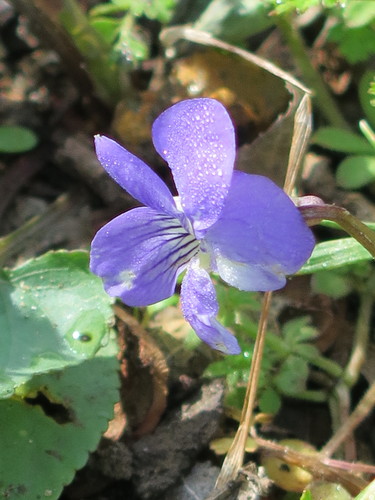
The small purple flower scattered through April and May lawns across the eastern US is the Common Blue Violet (Viola sororia). It is the state flower of four US states, and it is probably already growing in your yard whether you planted it or not.
What it looks like
The plants are short, only 10 to 15cm tall, with no upright stem. Heart-shaped leaves rise from the ground on their own stalks, and each flower sits on its own separate stalk. The flower has five petals: two pointing up, two on the sides, and one wider lower petal that acts as a landing pad for pollinators. Color ranges from deep purple to almost white, with fine dark lines guiding insects toward the center.
When and where
- Season: April through June for the obvious purple flowers.
- Habitat: Lawns, woodland edges, shady garden beds, stream banks across the eastern and central US.
- Best time: Mid morning on a sunny day. They close partially at night and in cold weather.
The secret second flower
In summer, the purple flowers disappear, but the plant keeps making seed. It produces a second kind of flower, called cleistogamous, that never opens and pollinates itself in the bud. These hidden flowers sit low on the plant and look like small green pods. Each pod splits open with surprising force and flings seeds a meter or more away from the parent. That is why violets keep showing up where you did not plant them.
Spot one this weekend
Common blue violets are Common across the eastern US. Walk slowly along the edge of a lawn or woodland trail and look low. The heart-shaped leaves often outnumber the flowers, so even after the bloom is past, the plant is easy to point out and add to your list.